5 minute read
Accessible Wedding Mandap: Steps, Seating and Comfort
Updated 21 October 2026
An accessible wedding mandap is one that elderly relatives and guests with mobility needs can reach, sit at and enjoy comfortably. Check the stage height, steps and seating early, ask your supplier what they can adapt, and test the route from the entrance to the seats.
Why plan for access from the start?
Access is not only about mobility. Some relatives tire quickly, feel dizzy when standing for long, have poor eyesight or find noise and crowds hard. Others simply feel more confident with a hand to hold. Sensitive planning usually means a few quiet options rather than a big announcement, so the person is helped without feeling singled out.
Mandap ceremonies often involve grandparents, parents and other relatives who have an important role to play. Some may find steps, long sitting or crowded spaces hard. Planning early lets you make quiet, sensible adjustments instead of last-minute fixes in front of everyone.
Every family is different, so start with a conversation. Ask the relatives involved what would help, and avoid assuming. Most people appreciate being asked.
Stage height and steps
Think too about getting down again. Going up a step with a helper is one thing, but coming down in a long outfit or with a garland on can be harder. Make sure steps have a clear edge, stable footing and good light, and keep decor and flowers away from the step edges so nothing catches a foot or a hem.
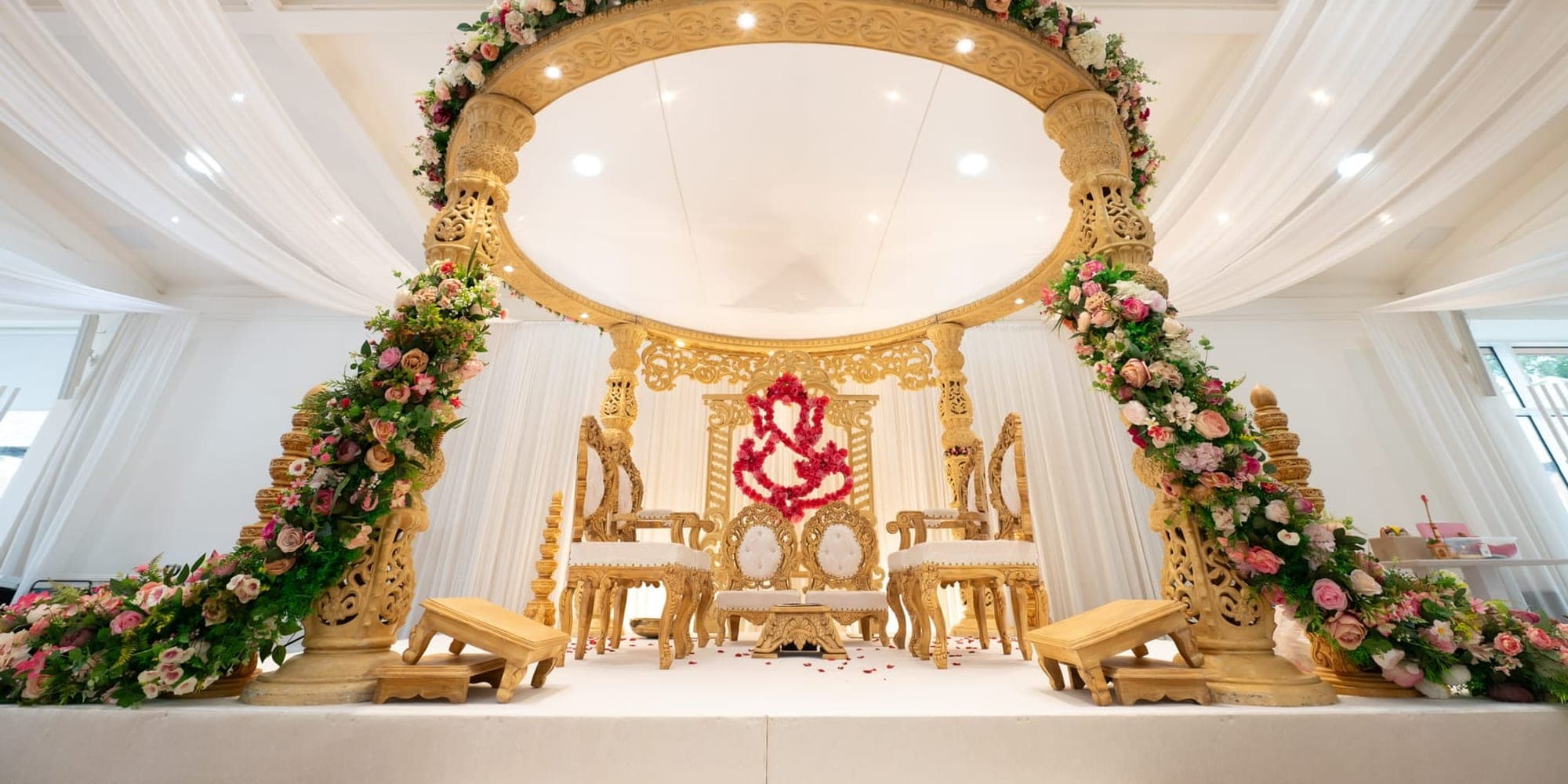
Many mandaps sit on a raised stage, and the height and number of steps affect who can get up comfortably. Ask your supplier:
- How high is the stage and how many steps does it have?
- Can steps be wider, deeper or placed on a different side?
- Is a handrail available for the steps?
- Is a ramp possible, and how much floor space does it need?
- Can the couple and key relatives be placed at floor level if needed?
Not every design or supplier can offer every adaptation, so ask at the quote stage. If you are unsure whether you need a raised stage at all, read mandap vs wedding stage: do you need both.
Seating for family at the mandap
Package deals typically include bride and groom chairs, side chairs and kanyadan chairs, along with patlas and bajots, a havan kund and choris. That gives you a starting point, but think about who will actually sit where and for how long.
Chairs or floor seating
Seating customs differ between families and traditions. Many couples use chairs for comfort, and some include low seating or cushions for particular moments. Ask your priest and elders what is suitable, and let the supplier know so the right pieces are on the stage.
Space for family members
A crowded stage is hard to move around on. Count how many people need to be on or near the mandap at once, and check the structure has room. Our Hindu wedding ceremony items checklist helps you list what needs to be on the stage.
The aisle surface and route
A firm, flat, well-secured aisle matters more than a decorative one. Carpet edges should be fixed down, and decor should leave enough width for a walking frame or wheelchair. Ask the venue about thresholds, ramps and any steps between the entrance and the ceremony space. Our guide to aisle decor, entrance gates and carpets covers surfaces in more detail.
Venue access, lifts and facilities
Ask the venue about step-free entry, lifts, accessible toilets and parking close to the entrance. For outdoor weddings, ask about the ground surface and whether a firm route to the mandap is available. See mandap space, ceiling height and outdoor weddings for more on outdoor planning. Our venue FAQs also list useful questions.
Heat, length and comfort during the ceremony
Lighting matters for comfort too. Soft but clear light around steps and aisles helps people see where they are going, and avoids dark corners. Read mandap lighting and draping ideas if you are planning dim or coloured light.
Long ceremonies, a crowded room and a havan fire can make a space warm. Ask the venue how heating and cooling are managed once the room fills, and whether windows or doors can open. If a havan is planned, check the venue's rules and ventilation in advance, as set out in our havan fire rules guide.
Small practical details help too:
- Keep water within reach of those seated on the stage.
- Place older relatives near an exit or a quieter side where possible.
- Ask your priest whether any parts of the ceremony can be shortened or taken seated.
- Have a family member or helper assigned to assist anyone who needs it.
Questions to ask your supplier and venue
It can also help to name one person as the access contact for the day. A cousin or friend who knows which relatives need help, and who can speak to the supplier or venue staff, takes pressure off the couple and the parents. Share your seating plan with them and the priest ahead of time.
- What is the stage height and what step options exist?
- Can a ramp or handrail be provided, and at what extra cost?
- How many seats are included and can more be added?
- Are the chairs sturdy, with arms or a firm back if needed?
- How wide is the aisle once decor is in place?
- What route will relatives use to reach the stage and leave it?
- What does the venue offer for step-free access?
Additional items are usually optional extras, and exact prices depend on location, requirements and time on site. Our guide prices start from £1,495 for Essential designs, and details are confirmed in the quote.
Making it feel natural
Finally, think about guests as well as family. Ask the venue where seats near the aisle can be kept for guests who need them, and whether anyone who needs to leave the room can do so without crossing the ceremony space. Small touches like these cost little and make a big difference.
Good access should not draw attention. Simple choices, such as a lower stage, a wider step or a well-placed chair, let everyone take part without fuss. Be open with your supplier and venue, and agree the details in writing.
Ready to start? Browse mandaps, save your shortlist in the compare tool and mention access needs in your quote request.
Quick answers
Can a mandap have a ramp or handrail?
Some suppliers can offer these, but it varies, so do not assume. Ask whether a ramp, handrail or lower stage is available for your chosen design and venue, whether it costs extra, and how it affects the look. Raise this at the quote stage rather than the week before.
Should elderly relatives sit on the mandap?
Families decide this differently, and customs vary by community. Some relatives take part seated nearby rather than on the stage. Talk to your priest and the relatives themselves about what is comfortable and what is expected, then ask the supplier for chairs to match.
Is floor sitting required at a mandap?
Practices differ by family and tradition. Many couples and relatives use chairs or low seating for comfort. Ask your priest what is acceptable for your ceremony, then check that your supplier's seating and cushions suit the people who will sit on them.
How do I keep guests cool during a long ceremony?
Check the venue's heating and ventilation before the day, and ask whether the hall can be adjusted once it fills. Outdoors, plan shade and water. Think about how long the ceremony runs and give older relatives a seat with easy access to an exit.
Compare mandaps and get one quote
Independent advice, clear starting prices, no chasing multiple suppliers.