5 minute read
Wedding Mandap Checklist: Hindu Ceremony Items to Plan
Updated 21 October 2026
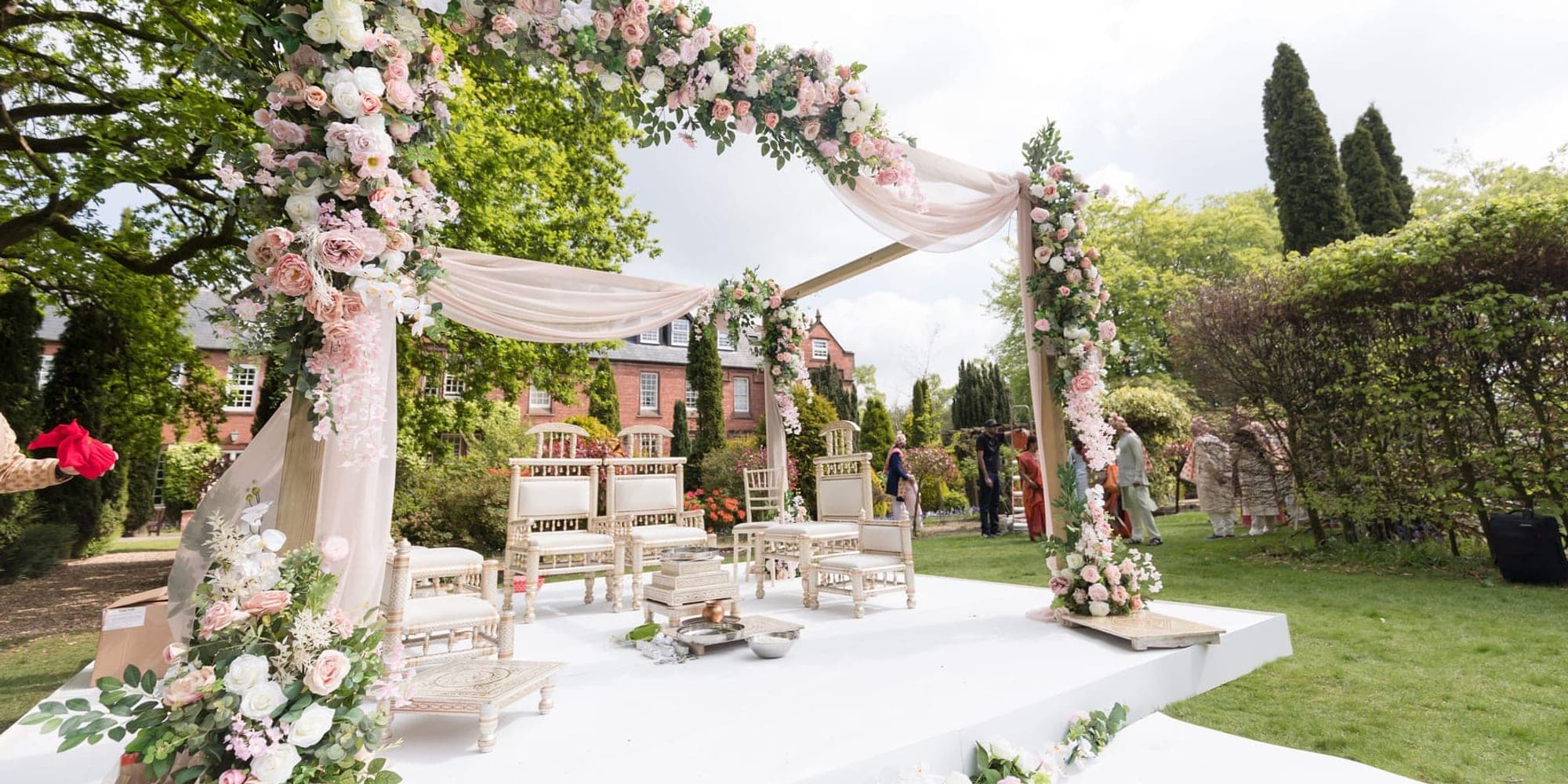
A wedding mandap checklist should cover the structure, the ceremony furniture, the decor and the items your family or priest brings. In package deals the furniture is typically included: couple's chairs, side chairs, kanyadan chairs, patlas, bajots, a havan kund and choris, plus pedestals with Ganesh murtis. Customs vary, so always confirm with your priest.
What does a wedding mandap checklist need to cover?
Most confusion on the day comes from one simple gap: everyone assumed someone else was bringing something. A checklist fixes that by giving every item a name and an owner. It also helps you compare quotes fairly, because you can see which supplier lists what.
Treat the list below as a starting point, not a rule book. Hindu ceremonies differ by region, community and family, and your priest will know exactly what your ceremony needs. Our companion guide on mandap set-up for different traditions explains why those differences matter.
Work through it section by section with a pen in hand. Even a family that has attended many weddings can overlook a small item, and the checklist is a calm way to catch it weeks before the day rather than minutes before the ceremony.
Seating on and around the mandap
- Bride and groom chairs: the main seats for the couple.
- Side chairs: for parents or other family members seated close to the couple.
- Kanyadan chairs: for those taking part in the giving away of the bride, where your customs include it.
- Extra seating: for the priest, or for elders who need a chair rather than the floor.
The key question is how many people will actually sit on or beside the mandap. Ask your priest and elders for a firm number, because adding chairs later can affect the layout and the available space.
Think about the comfort of older relatives too. A chair that is a little higher or has arms may suit a grandparent better than a standard seat. Raise this at quote stage, since the supplier can tell you what is available, though availability is always confirmed in the quote.
Ceremony furniture and floor items
- Patlas: low wooden stools or seats used in parts of the ceremony.
- Bajots: low tables or stands for ceremonial items.
- Havan kund: the vessel for the sacred fire, where used. See our guide to havan and fire rules at venues before you finalise this.
- Choris: ceremonial pillars or posts placed around the fire area in some traditions.
- Pedestals and Ganesh murtis: commonly placed beside the mandap.
Packages usually include these as a set. At the lowest prices, check each item is listed rather than assumed. Our guide to what is included in mandap hire explains how inclusions change as you move up price levels.
Stage, carpet and entrance items
These are the pieces most likely to be quoted separately. The stage, stage carpet, aisleway decor, aisleway carpet and entrance archways are usually optional extras at the lowest prices and often included in larger packages above roughly £2,500, depending on location. Carpets and the entrance gate are quoted separately.
Carpets add warmth and finish to the stage and aisle, while an entrance gate or archways can give guests a clear sense of arrival. If either matters to your family, ask for it to be priced as a separate line so you can see the cost clearly and decide whether it is worth it for your budget.
What families and priests usually bring
The mandap supplier provides the structure and furniture. The ceremonial materials themselves usually come from the family or priest. Because lists differ by community, ask your priest for a written list early and decide who will collect each item.
- Items for the puja and havan, as directed by your priest.
- Flowers, garlands and petals for the ceremony, unless you have ordered extra decor from the supplier.
- Cloths, offerings and keepsakes your family wants on or near the mandap.
- Anything with family or religious significance that you want placed in a particular spot.
Additional artificial or fresh flowers on the mandap itself are always an optional upgrade, so decide early whether the family will arrange their own or order them through the supplier. If you are weighing the two, our guide to fresh versus artificial flowers may help.
Step-by-step: building your own checklist
- Ask your priest for the full list of items and furniture your ceremony needs.
- Write each item down with who is responsible: supplier, family or priest.
- Compare that list with your quote and mark anything missing.
- Confirm quantities for chairs, patlas, bajots and pedestals.
- Check venue rules on fire, candles and incense before you commit to a havan kund.
- Share the final list with the supplier and the person coordinating on the day.
- Re-check the list a week before the wedding.
One practical tip is to photograph everything on the morning of the wedding, once the set-up is complete. If something has been missed, there may still be time to fix it, and you will have a record of exactly how the ceremony space was arranged. Assign one trusted relative to check the space against the written list before guests arrive.
Questions to ask the supplier
- Which items are included at my price level, and which are extras?
- Can you confirm the number of each type of chair?
- Is a havan kund included, and does the venue allow it?
- Will the pedestals and murtis be supplied, and can mine be used instead?
- Who arrives first, and who will set the furniture out?
- How and when do I tell you about changes?
Remember that designs are shown as examples and availability is confirmed at quote. For the money side, our pricing guide explains guide prices from £1,495, and the booking FAQs cover timings.
A short note on other faiths
This checklist is written for Hindu ceremonies. Sikh and Muslim wedding ceremonies differ and do not usually use a mandap, so their needs are different.
The aim of all of this is a calm ceremony in which nobody is hunting for a missing item while guests wait. A clear list, agreed early with your priest and your supplier, makes that far more likely, and it also makes comparing quotes much simpler.
Ready to start? Browse the mandap collection, add designs to compare, and ask for a quote with your completed wedding mandap checklist attached.
Quick answers
Does mandap hire include the havan kund?
In package deals the ceremony furniture is typically included, and that normally covers a havan kund and choris, but it varies by supplier and price level. Check the written quote line by line, and ask your priest whether they prefer a particular size or style.
Who supplies the puja items such as rice, ghee and flowers?
Usually the family or the priest, not the mandap supplier. Needs differ by community and ceremony, so ask your priest for a written list well in advance. Share it with whoever is organising the day so someone is clearly responsible for each item.
How many chairs will we need on the mandap?
It depends on your customs and who sits with the couple. Bride and groom chairs, side chairs and kanyadan chairs are common in packages. Confirm numbers with your priest and family elders, then tell the supplier the exact count at quote stage.
Are carpets and the entrance gate part of the ceremony set?
Not usually. Carpets and the entrance gate are normally quoted separately from the ceremony furniture. Stage, aisle decor and archways may be optional extras at lower prices and often included in larger packages. Ask for each to be listed on your quote.
Compare mandaps and get one quote
Independent advice, clear starting prices, no chasing multiple suppliers.