5 minute read
What Is a Mandap? Meaning, Parts and Symbolism
Updated 21 October 2026
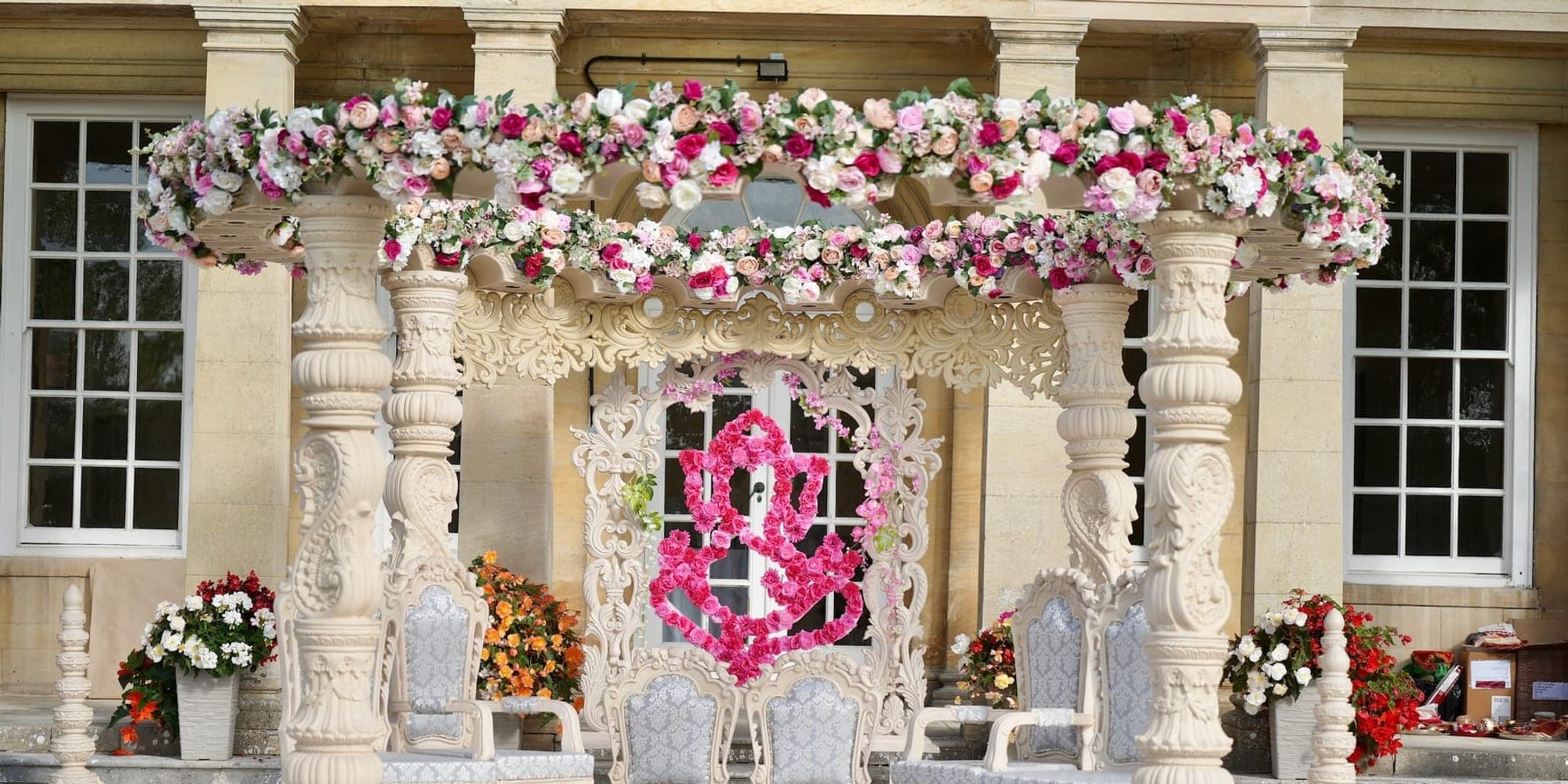
What is a mandap? It is the decorated, canopied structure under which a Hindu wedding ceremony takes place, usually a raised base with pillars and a roof where the couple sit with the priest and close family. Designs range from simple draped frames to large floral pavilions, and customs differ between families, so always check with your priest.
What does a mandap look like?
Picture a small, open-sided shelter built for the day. It has a floor or platform you step onto, posts at the corners, and something overhead that marks the space as special. Around and inside it you will usually find flowers, fabric, lights and seating arranged for the ceremony.
Beyond that, there is no single correct look. A mandap can be white and minimal, deep red and gold, wrapped in greenery, or built from carved wood. Browse our mandap designs and you will quickly see how different two structures can be while serving the same purpose.
What are the main parts of a mandap?
Most structures, however plain or elaborate, are made from the same handful of elements. Knowing them helps you read a quote and spot what is missing.
- Pillars or posts: the vertical supports at the corners. Four is common, though some designs use more or fewer.
- Roof or canopy: the covering overhead, which can be a flat frame, a draped fabric ceiling, a dome or an open lattice.
- Base or platform: a raised floor, sometimes with a step, that lifts the ceremony so guests can see it.
- Seating: chairs for the couple and for those who take part, which may include parents and the priest.
- Ceremonial items: objects needed for the rituals, such as a havan kund and small tables or stools, which vary by tradition.
- Decoration: fresh or artificial flowers, drapes, lighting, garlands and hanging details that give the structure its character.
Some of these, such as the ceremonial items, may be supplied by the hire company, your priest or your family, depending on the package. Our guide to what is included in mandap hire explains how to check.
Why do many mandaps have four pillars?
Four pillars is the arrangement most people picture, and it is very widely used. Families and communities describe its meaning in different ways, and some attach particular significance to each post while others see the shape as simply traditional and practical. We would not want to tell you there is one right explanation.
If the symbolism matters to you, ask your priest and older relatives what it means in your family. If it does not, you are free to choose a design with two pillars, six pillars or an open canopy. Do note that designs with side wings or six or more pillars generally cost more than a standard four-pillar design because they need more materials and time.
Where is a mandap used: temple, venue or home?
The word covers quite different settings, and the right size and style depend on where you are.
In a temple
Many temples have a permanent ceremony area, sometimes with its own fixed structure. If so, you may only need to dress it with flowers rather than hire a whole mandap. Ask the temple what is allowed before you spend anything.
In a hotel, banqueting hall or marquee
This is where hired mandaps are most common. The structure is built on the day, so check the room, the ceiling and any rules the venue has. Our guide on space, ceiling height and outdoor weddings covers the practical questions.
At home or in a garden
A smaller design often suits a private setting, and a garden gives plenty of natural light for photographs. Weather and ground conditions matter outdoors, so raise them with the supplier early.
Traditional or modern: how do styles differ?
A traditional mandap tends to lean on rich colour, strong structure and familiar motifs. A modern one may use clean lines, pale drapes, hanging flowers or lighting as the main feature. Neither is more authentic, and many couples blend the two.
Size matters as much as style. A very large structure in a small room looks cramped, while a tiny one in a big hall can feel lost. Our guide to choosing style and size helps you match the design to the room.
What do you actually hire?
When you hire a mandap, you are normally paying for the supplied structure and its decoration, plus delivery, setup and collection. Our guide prices run from £1,495 for Essential designs, with Standard from £1,995 to £2,995, Premium from £3,495 to £4,495 and Luxury from £5,495 to £7,995. These are guide prices, and the exact figure depends on location, requirements and time on site, confirmed in your quote.
At the lowest prices, items such as a stage, aisleway decor and entrance archways are usually optional extras. In larger packages, above roughly £2,500, they are often included, depending on location. Extra flowers, fresh or artificial, are always an optional upgrade.
A simple way to start
- Speak to your priest and family about any customs that must be respected.
- Find out the size of the space and whether the venue sets any rules.
- Choose a style you like and shortlist three to five designs.
- Compare them side by side and note what each one includes.
- Send one enquiry so the supplier can confirm availability and an exact price.
Questions worth asking your family first
A mandap is as much a family decision as a design choice. Before you fall for a photograph, find out whether anyone has expectations about the structure, the number of pillars, the colours or the items placed inside it. Elders often have strong and well-informed views, and a short conversation early on avoids awkward changes later.
It also helps to ask your priest what they need from the space. Some prefer a particular amount of room for the ritual items, or a certain seating arrangement for those taking part. Pass that information to the supplier so the design works in practice, not only in photographs.
Other faiths and ceremonies
Sikh, Muslim and other wedding ceremonies are different from Hindu ones and do not usually use a mandap. If your celebrations include more than one tradition, you may need a separate setup for each, and it is worth checking with each family what they expect.
Ready to see real options? Browse all mandaps, build a shortlist on the compare page and send a single enquiry through our quote form. Not sure about a term? The FAQs answer the common design questions.
Quick answers
Is a mandap the same as a wedding stage?
Not quite. The mandap is the ceremony structure, usually with pillars and a roof, where the couple sit with the priest. A stage is a raised platform that may sit beneath it or be used separately. Many hire packages combine the two, so check what each quote covers.
Do all Hindu weddings use a mandap?
Most do in some form, but practice varies by region, community and family. Some ceremonies use a very simple setting, while others use a large decorated structure. If you are unsure what your family expects, speak to your priest and elders before you choose a design.
Does a mandap have to have four pillars?
No. Four pillars is a very common arrangement, but designs also use two, six or more, or open canopies and arches. Any symbolism attached to the pillars differs between families, so ask your priest what matters to you before you decide.
Can a mandap be used outside the wedding ceremony?
Often, yes. Many couples use the same structure as a backdrop for photographs and family portraits afterwards. If you want that, mention it when you enquire so the supplier can confirm how long it stays in place and whether the layout suits the photographs you want.
Compare mandaps and get one quote
Independent advice, clear starting prices, no chasing multiple suppliers.