5 minute read
Mandap Structures Explained: Pillars, Canopies, Arches
Updated 21 October 2026
Mandap structures fall into six broad types: the round canopy, the square frame, the four-pillar pavilion, the arch or ring, the drape canopy and the stage backdrop. Each needs a different amount of floor space and height, and each behaves differently indoors, in a marquee or outdoors. This guide explains what each looks like and who it suits.
What are the main types of mandap structure?
Most designs you will see are variations on a handful of shapes. Knowing the shape helps you read a photograph properly, because decor and flowers can make two very different structures look similar at first glance. The six types below are how we group designs when you browse the full collection.
- Round canopy: a domed or circular top, often on slim posts, softened with flowers or fabric.
- Square frame: a clean four-cornered frame with a flat or lightly raised roof, popular for modern looks.
- Four-pillar pavilion: the classic shape, with a pillar at each corner and a solid or decorative roof.
- Arch or ring: a curved or circular feature the couple sit beneath or in front of.
- Drape canopy: fabric stretched or swagged over a light frame, often with hanging details.
- Stage backdrop: a wide panel or screen behind a raised stage rather than a freestanding cover.
Round canopy mandaps
A round canopy gives a soft, central focus. It tends to suit couples who want something gentle rather than formal, and it photographs well from several angles because there are no hard corners. The pink round floral canopy mandap is a good example of the idea.
The trade-off is that a round top needs a little extra height for the curve, and the circular footprint can take more room than it first appears. In a low-ceilinged hall, check the highest point carefully.
Square frame mandaps
A square frame is the most adaptable shape for decoration. Because the lines are simple, it takes flowers, garlands, lights or fabric well, and it is easy to scale up or down for a smaller room. The timber frame floral mandap shows how a plain frame can feel warm once it is dressed.
It suits couples who want a contemporary feel, or whose families would like a familiar four-sided layout without heavy ornament. The downside is that a very plain frame can look sparse in a large venue unless it is generously decorated.
Four-pillar pavilions
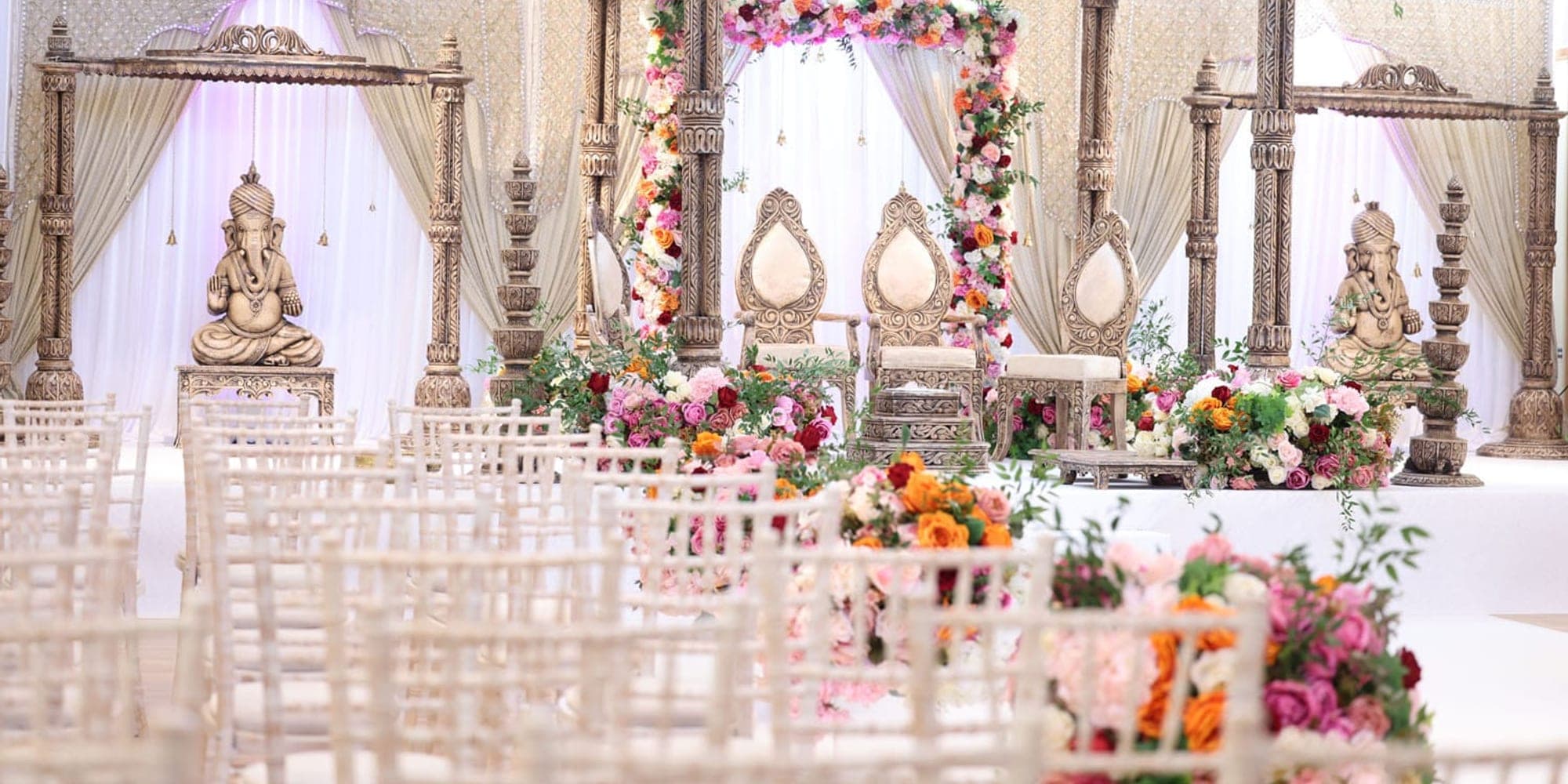
This is the structure most people picture when they hear the word mandap. Four pillars and a roof create a defined, enclosed space for the ceremony, which many families find reassuring and traditional. Examples include the carved cream pavilion mandap and the gold pillar red rose mandap.
Pavilions are usually the most substantial option, so they need clear floor space and decent height. Designs with side wings or six or more pillars are bigger again, which is why they sit one step higher on our guide price list. For the thinking behind choosing between classic and contemporary, read our guide to traditional versus modern mandaps.
Arches and rings
An arch or ring is the lightest structure of the group. It frames the couple rather than covering them, so it works well where ceilings are low or floor space is tight. Covered in greenery or blooms, it can look generous without taking up much room, as with the rose and foliage white mandap.
Because there is no roof, an arch gives less sense of a defined ceremonial space. Some families prefer more enclosure, so it is worth asking your priest and elders what they expect before you fall for the look.
Drape canopies and stage backdrops
Drape canopies use fabric over a lighter frame, which makes them flexible and kind to awkward spaces. The manor lawn white drape mandap and floral drape outdoor mandap show the style. Fabric moves in wind, so outdoor use needs a sensible plan.
A stage backdrop is different again. It sits behind a raised platform and is designed to be seen from the front, which suits large halls and big guest lists. It can feel less like a canopy and more like a set, so check that the look matches what your family has in mind.
Which structure suits indoor, marquee or outdoor weddings?
Indoors, the limiting factors are ceiling height, light fittings and floor loading. Low ceilings favour arches, drapes and backdrops. High halls can carry a pavilion or round canopy with ease.
In a marquee, pole positions and the lining often decide what is possible, so read our guide to mandap hire for a marquee. Outdoors, wind and uneven ground matter most, so sturdier, well-anchored frames are usually safer than light fabric. More detail is in our guide to space, ceiling height and outdoor weddings.
How to choose between structures
- Measure the ceiling height at the exact spot where the mandap will stand, and note any lights or beams.
- Measure the floor space and allow room for the stage, steps and people to move around.
- Decide how much enclosure your family wants, using advice from your priest and elders.
- Shortlist two or three designs of different shapes and compare them side by side.
- Send the venue details with your enquiry so the supplier can confirm fit and set-up time.
Our guide prices start from £1,495 for Essential designs, with Standard from £1,995 to £2,995, Premium from £3,495 to £4,495 and Luxury from £5,495 to £7,995. Your exact price depends on location, requirements and time on site, and is confirmed in the quote. Our pricing guide explains the details, and the pricing FAQs answer common questions.
Mistakes to avoid
- Falling for a photo without checking the height of the structure against your ceiling.
- Assuming every design is available in every colour. Designs are shown as examples, and availability is confirmed at quote.
- Forgetting the stage. A raised stage adds height, so measure with it included.
- Leaving the structure decision until the venue is booked and then discovering restrictions.
Ready to narrow it down? Browse the mandap collection to find the right structure, add favourites to our compare tool, and then request a quote with your venue details.
Quick answers
Which mandap structure is the most flexible for different venues?
Drape canopies and stage backdrops tend to adapt best, because they can be sized to the room and need less clear floor space than a freestanding frame. Even so, always share venue photos and measurements so the supplier can confirm the structure will fit before you commit.
Does the number of pillars change how much a mandap costs?
Often, yes. Designs with side wings or six or more pillars take more materials and time, so they usually sit a step higher on our guide price list than a standard four-pillar frame. The exact figure depends on location and requirements and is confirmed in your quote.
Can I mix a structure from one design with the flowers of another?
Sometimes. Many suppliers will dress a structure in a different colour scheme or flower style, but this is a request to make at quote stage, not a promise. Additional artificial or fresh flowers are always an optional upgrade, and availability is confirmed by the supplier.
Is a taller mandap always better for photographs?
Not necessarily. A tall structure in a low room looks cramped and can be impossible to fit, while a modest one in a large hall can look lost. Judge height against the ceiling and the guest sightlines, and ask to see photos of the design in a similar space.
Compare mandaps and get one quote
Independent advice, clear starting prices, no chasing multiple suppliers.