5 minute read
Mandap for Different Wedding Traditions: What Varies
Updated 21 October 2026
A mandap for different wedding traditions is not one fixed set-up. Hindu customs vary by region, community and family, so seating, items, timing and decor preferences can all differ. The reliable approach is to ask your priest and elders what your ceremony needs, then give your supplier a clear written brief. This guide shows what usually varies and how to prepare.
Why do mandap set-ups vary between families?
Hindu communities in the UK come from many regions and backgrounds, and each has its own ways of holding a wedding. Gujarati, Punjabi Hindu, South Indian and Bengali families, to name only a few, may each arrange things differently. Even within one community, practice can change from family to family and from one priest to another.
That is why no guide can tell you what is correct for you. What a guide can do is help you ask the right questions, so that the practical set-up supports your ceremony instead of working against it. For background on the structure itself, see our guide to what a mandap is.
What typically differs from one tradition to another?
- Seating arrangement: who sits on or beside the mandap, and where.
- Items and furniture: the number and type of chairs, low seats, tables and pedestals.
- Timing and flow: how long each stage takes and when the couple arrive.
- Structure and size: how much space the family wants around the ceremony.
- Decor preferences: colours, flowers and the amount of ornament.
- Items supplied by the family: which ceremonial materials the family or priest brings.
None of these points is a rule. They are simply the areas where families tend to have views, and where a mismatch with the supplier causes problems on the day.
Who should you ask before you choose a design?
Start with your priest. They will know what the ceremony needs in terms of space, furniture and fire, and they can often tell you what has worked at similar venues. Then speak to grandparents, parents and other elders, because they often hold strong views and are happiest when consulted early.
If your two families come from different backgrounds, bring both sides into the conversation together. It is much easier to agree a combined approach before a design is booked than to alter it later.
How does the mandap structure interact with tradition?
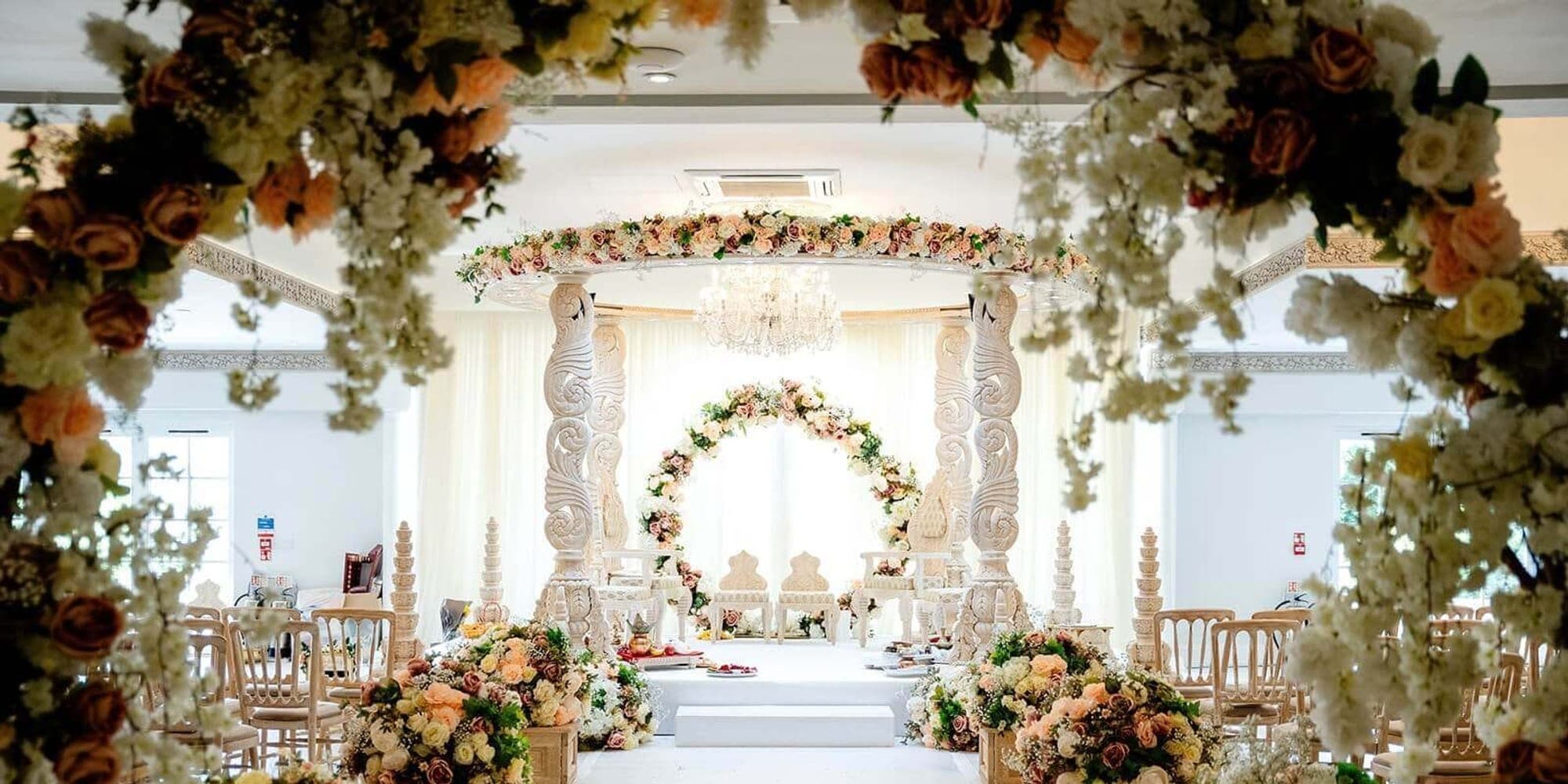
Many designs suit a wide range of families, because the structure is only part of the picture. A four-pillar pavilion, such as the carved cream pavilion mandap, offers a clearly defined space. A lighter design such as the pom pom garland white mandap gives a different feel with the same practical needs.
What matters is whether the space inside is the right size for your seating and whether the design allows the fire and other items to be set where your priest wants them. Our guide to mandap structures explains how shapes differ.
How to brief your mandap supplier
A good brief saves time and avoids last-minute changes. Include the following, ideally in one email or in your enquiry:
- The date, venue and room, with photos or measurements if you can.
- Who will sit on or beside the mandap, and how many chairs you expect to need.
- Any items your priest has asked for, and whether the supplier or family provides them.
- Whether a havan is planned, so the venue and supplier can confirm it is allowed.
- Colour and flower preferences, and whether any are important to your family.
- The ceremony start time and how long you expect it to run.
- Any customs you want the supplier to be aware of while setting up.
You can include all of this when you request a quote. Our guide to comparing quotes shows how to check that each supplier has priced the same brief.
It also helps to think about the guests. Relatives may expect to see certain parts of the ceremony clearly, so consider sightlines and where seating faces. A layout that follows custom but hides the couple from half the room can be adjusted with the stage position, and a supplier can help you picture that with a simple sketch.
Practical points that apply to any tradition
Some things are the same whichever customs you follow. Check the venue's rules, especially on fire, candles and incense, using our guide to havan and fire rules at venues. Confirm how much time the supplier needs on site. Make sure your layout leaves space for photographers and for elders to move safely.
On inclusions, remember that stage, carpet, aisleway decor and entrance archways are usually optional extras at the lowest prices and often included in larger packages, depending on location. Our guide prices begin from £1,495, and the exact price depends on location, requirements and time on site, confirmed in your quote. The design FAQs answer common questions on styles.
A respectful note on other ceremonies
This guide is about Hindu weddings, where the mandap is most commonly used. Sikh and Muslim ceremonies differ and do not usually use a mandap, so their set-ups follow different customs and are best discussed with the relevant officiant or community.
What if the venue limits the set-up?
Sometimes a venue cannot accommodate everything a family would like, because of space, ceiling height or fire rules. When that happens, go back to your priest and explain the limit plainly. They can often suggest an adjustment that keeps the ceremony meaningful, such as a smaller fire arrangement or a different seating plan. Asking early gives everyone time to find a solution.
Keep the conversation flexible
Families sometimes want to adapt a tradition to fit a modern venue or a smaller space. That is a reasonable thing to discuss with your priest, who can say what is acceptable. If a compromise is needed, agree it before you finalise the design, so your supplier is working from the final plan.
Designs are shown as examples, and availability is confirmed at quote. Browse the full mandap collection, shortlist favourites in our compare tool, and use what you have learned to plan a mandap for different wedding traditions that suits both families.
Quick answers
Is there one correct way to arrange a mandap?
No. Layouts, seating and items vary by region, community and family, and sometimes between priests from the same background. The safest approach is to ask your priest and the senior members of both families, then pass one agreed brief to your supplier.
What should I do if the two families follow different customs?
Talk early and write down where you differ. Often a layout can accommodate both, for example with flexible seating or extra items. Ask your priest to advise on a combined approach, and share the final version with the supplier before quote stage.
Can a hire company advise on how my ceremony should be arranged?
A supplier can show how layouts usually work and what their furniture allows, but the ceremony itself is for your priest and family to decide. Treat the supplier as the practical partner, and treat your priest as the authority on how the ceremony runs.
Do I need a different mandap design for a different tradition?
Not necessarily. Many designs suit several traditions, because the differences are often in seating, items and timing rather than the structure. Tell the supplier your needs so they can check that the design and furniture you like will accommodate them.
Compare mandaps and get one quote
Independent advice, clear starting prices, no chasing multiple suppliers.